Two ways to get from your contract to your cash buyer, plus a third one some investors use. Here's how each one works, what it costs, and the state rules that still apply no matter which one you pick.
Module 5: Contract to closeAbout 16 min readFree course
With an assignment, your cash buyer takes over your contract and closes with the seller: one closing, and your fee is paid there. With a double close, you buy the house and resell it, usually the same day: two closings, and you fund the first one with your cash or transactional funding. Assign when you can. Neither method gets you around a state license law.
Lesson
16 of 19, module 5: Contract to close
Time
About 16 minutes to read
You'll need
Your purchase agreement, your title company's phone number and your state's rules
Next
Lesson 17: the title process for wholesalers
The short answer
What's the difference between an assignment and a double closing?
You've got a house under contract and a cash buyer who wants it. Now you have to get the deal from your contract to their hands. There are two common ways to do it.
With an assignment, you sign an assignment agreement and your buyer steps into your contract. They close with the seller. There's one closing and one deed, from the seller to your buyer, and your assignment fee is paid at that closing.
With a double close, you actually buy the house from the seller, then sell it to your buyer, usually the same day at the same title company. That's two closings, two deeds and two settlement statements. You have to fund the first closing yourself or with transactional funding, a short loan made for this.
A third structure, the LLC sale, comes up a lot in investor groups. You sign the contract in the name of an LLC, then sell the LLC itself to your buyer. I cover it below, risks and all.
Here's why this matters. A lot of wholesalers use a double close, transactional funding or an LLC sale to work within their state's wholesaling and license laws. That can be a legitimate choice. But each one has limits, and in several states it doesn't change anything. I'm a real estate investor, not an attorney or financial advisor, so treat this lesson as education, not legal advice.
Your buyer takes over your contract and closes with the seller. Your fee is paid at that closing.
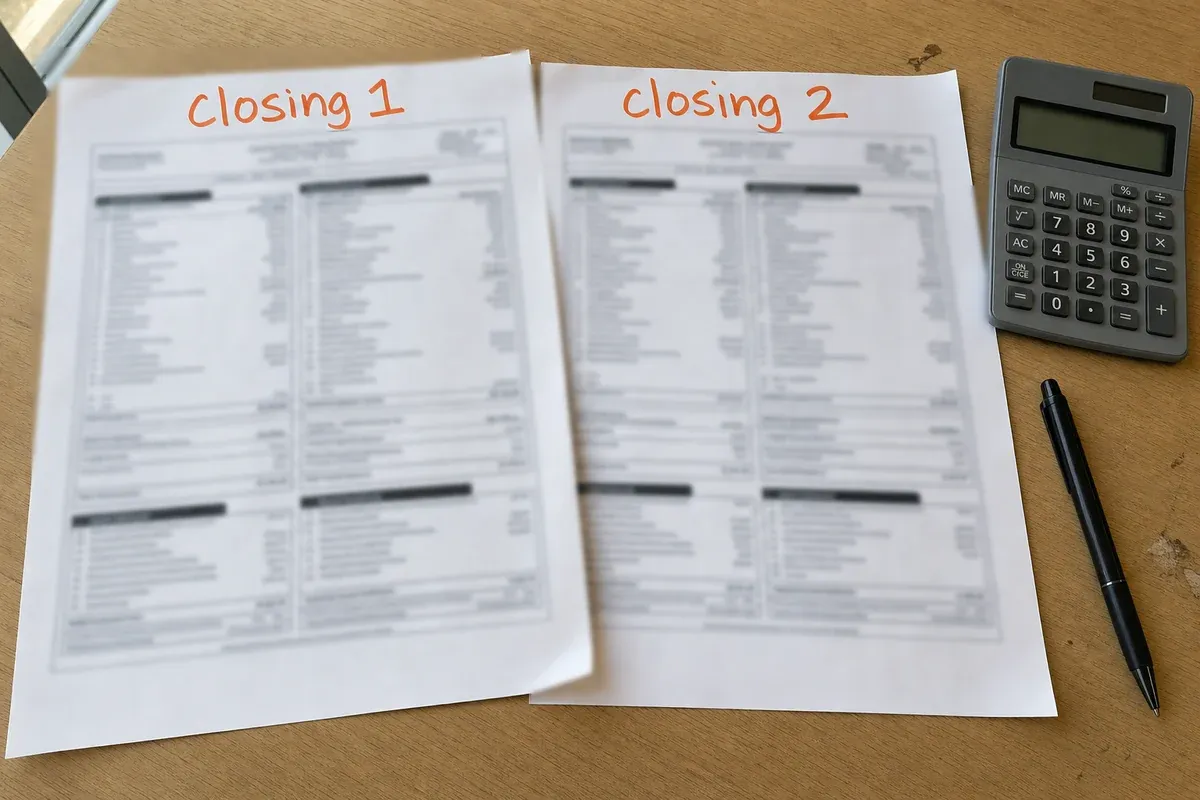
Double close: two closings
Sellerclosing 1Youclosing 2Cash buyer
You buy the house, then resell it to your buyer, often the same day. Two sets of closing costs, and you fund the first closing.
Two ways to hand a deal to your cash buyer
Quick comparison
Assignment vs. double closing vs. LLC sale
Here's how the three stack up. The rest of the lesson explains each row.
Assignment
Double close
LLC sale
Closings
One
Two, back to back
One closing with the seller, plus a separate sale of the LLC
Deeds
One: seller to your buyer
Two: seller to you, you to your buyer
One: seller to the LLC
Who pays the seller
Your buyer
You, with your cash or a transactional lender
The LLC, now owned by your buyer
Title orders
Usually one
Often two, each charged on its own
Depends on the deal. Ask title early.
Transfer tax
One deed (Pennsylvania also taxes the fee)
Can apply to both deeds
Several states tax the sale of an entity that holds real estate
FHA buyer
Not eligible
Not eligible on a same-day resale
Not a fit for a financed buyer
Where it's used
Most wholesale deals with cash buyers
Contracts that can't be assigned, bank-owned and listed homes
Less common. Attorney-drafted deals.
Step by step
How to pick between an assignment and a double close, step by step
1
Step 1: Start with your contract
Pull out your purchase agreement. Can you assign it? Most wholesale contracts say the buyer is your name and/or assigns, which lets you hand the contract to someone else. My wholesale contracts and Lesson 14 cover the wording.
Then look for an anti-assignment clause. Bank-owned homes, HUD homes and many listed homes come on the seller's own contract, and those often say you can't assign. Whether a clause like that also blocks a double close or an LLC sale depends on the exact words and your state's law. There's no general rule here, so have an attorney read the clause before you plan around it.
If you can assign and your buyer is paying cash, an assignment is usually the simpler, cheaper path. Keep going anyway, because the state rules in step 2 can change the answer.
Checklist
Assignment wording in your contract
No anti-assignment clause, or an attorney has read it
Your seller knows you may assign, in writing
2
Step 2: Check what your state's law says about each method
This is the step people skip. Wholesaling laws are written in different ways, and the way they're written decides whether the closing method matters at all.
Some laws name the double close outright. Oklahoma's definition of a wholesaler includes someone who "engages in double closing." Illinois and Virginia count dealing in contracts two or more times in 12 months, whether you assign or buy and resell. Minnesota's general license law presumes you're in the business at 5 or more deals as a principal in 12 months. And in South Carolina, Kentucky, Nebraska and Oklahoma, the trigger is how you market, which happens before any closing.
Other laws are written around assigning a contract or selling without taking title, like Pennsylvania, Connecticut and Iowa. A real purchase and resale may fall outside those definitions. "May fall outside" isn't the same as safe, and the general license law still applies. The state table below has the details, and Lesson 2 covers the basics.
Your end buyer's money decides a lot. A cash buyer can take an assignment or close a same-day double close. A buyer with a loan is a different story.
FHA's rule, 24 CFR 203.37a ↗, says the property must be bought from the owner of record and the deal "may not involve any sale or assignment of the sales contract." A resale 90 days or less after the seller bought the house isn't eligible either. So an FHA buyer can't take your assignment, and a same-day double close doesn't fix it.
Other loans get extra checks. A higher-priced mortgage can need two appraisals when the seller bought within 180 days and the price jumped (12 CFR 1026.35 ↗). Fannie Mae tells lenders that confirming the seller owns the house is "especially important" on assignments and double closings (B4-1.1-02 ↗). Some lenders won't close a loan at the same time as another sale without written consent (ATGF ↗).
Checklist
Cash or loan, confirmed with proof of funds
No FHA loan if you're assigning or double closing
The buyer's lender asked about its rules
4
Step 4: Ask your title company how they handle each one
Call your closer before you pick. Ask if they close assignments, if they do double closes, and how they need the first closing funded. Lesson 6 has the call script for finding a title company that does both.
Tell them about every party up front: your buyer, any transactional lender and any LLC buyer. The standard title commitment form asks you to name anyone who will get an interest in the property or make a loan, and the title company can add requirements once it knows (ALTA commitment form ↗). Surprises late in the deal are what kill closings.
Ask about title insurance too. On a double close there may be two orders. Stewart Title's Utah rate manual says a double sale needs "two separate title commitments with two separate escrows, each independently funded" and "each order is charged independently." Other states and companies vary, so get it in writing.
Checklist
Assignments and double closes: yes or no
How the first closing must be funded
Every party named to title up front
Fees for both methods, in writing
5
Step 5: Run the costs side by side
An assignment has one set of closing costs, and your buyer usually covers the buyer side. A double close has two, and you're the buyer on the first one. That means title and closing fees on both legs, transfer tax that can apply to both deeds where your state taxes each deed, and the cost of funding the first closing.
Ask your title company or closing attorney for an estimate of both methods on the same deal, then run them through your numbers. The cost table below shows what changes, and the example has the transactional funding rates two lenders publish.
If a double close leaves too little in the deal, that's your answer. Don't squeeze your buyer or your seller to make a more expensive method work.
Checklist
A written estimate for both methods
Transfer tax for both deeds checked
Funding cost quoted in writing
6
Step 6: Pick the method and put it in writing
Now pick. If you can assign, your buyer pays cash and your state's law treats both methods the same, the assignment is usually the cleaner deal. If the contract can't be assigned, or your title company or your state's rules point the other way, a double close may fit better.
Whatever you pick, be upfront. Several state laws, including Missouri, Ohio, Pennsylvania, Oregon and Tennessee, require written disclosure of what you're doing, and some require it to the end buyer too. Pick a method because it fits the deal, never to hide your role or your fee.
Write the plan down for your title company: the method, every party, how the first closing gets funded and who signs what. Then have a local attorney check it before you sign the assignment or the resale contract.
Checklist
Method picked for a reason you can explain
Your state's disclosures signed
The plan emailed to your closer
An attorney's review on anything unusual
7
Step 7: Ask these questions before you decide
There's no best method for every deal. These are the questions I'd ask my title company or attorney before I pick one.
Questions for title or your attorney
Does my state's law treat a double close or an LLC sale the same as an assignment?
Do you close both, and how must the first closing be funded?
How many title orders and transfer taxes will a double close have?
Does my contract allow assignment, or a change in who owns the LLC?
What does my end buyer's lender allow?
What disclosures does my state require, and to whom?
8
Step 8: Keep notes for next time
After each closing, write down what the method cost, how long it took and anything the title company asked for. Next time you'll know the answer before you call.
Count your deals too. In states that count deals in a 12-month window, your second or fifth deal can change the rules, whatever method you use. Lesson 19 covers keeping that count.
Checklist
Costs and timeline saved for each closing
Your deal count for the last 12 months
Or get your license. In these states, a real estate license may be the cleanest path. That's Oklahoma, Illinois, Virginia, Minnesota, South Carolina, Kentucky and Nebraska, where the closing method doesn't change the rule. Colibri Real Estate School ↗ has pre-licensing courses for each of them. Heads up: I earn a commission if you buy through my link. Costs you nothing extra, but it helps fund my Starbucks addiction. ☕
Same thing, different names
Simultaneous closing vs. double closing: what the terms mean
You'll hear a lot of names for the same basic idea: two closings on the same house, one right after the other. Fannie Mae's guide lists "back-to-back, simultaneous, double transaction closings, or double escrows" together, so treat them as the same thing unless your closer says otherwise.
Double closing: you buy from the seller (A to B) and sell to your buyer (B to C). Oklahoma's law defines it as closing "two separate transactions on the same property, one with the original seller and one with the end buyer."
Simultaneous or back-to-back closing: the same thing, usually on the same day at the same office.
Double escrow: the same idea with two escrows, the term you'll hear where escrow companies run closings.
Dry double close: your buyer's money from the second closing pays for the first one. Many title companies won't do it, and Utah's rule bars it. One Florida title company says it needs written consent and underwriter approval, and that a buyer's loan money generally can't be used (secondary source, Atlantic Title ↗).
Funded double close: the first closing is paid with your own cash or transactional funding, then the second closing happens. This is what most title companies want.
What changes
What a double close costs compared to an assignment
A double close isn't free. Here's what changes. I only list numbers a named source publishes, and the rest is "ask for a quote," because fees vary and are quoted by the lender, title company or closing attorney.
Cost
Assignment
Double close
Closings
One settlement statement
Two settlement statements
Title insurance
Usually one set of policies
Often two orders. Stewart's Utah rate manual charges each one independently. Elsewhere, fees vary.
Transfer tax
One deed. In Pennsylvania the assignment fee is part of the taxable value.
Two deeds, so it can apply twice where your state taxes each deed. Check your state.
Funding
None. Your buyer brings the money.
Your own cash, or a transactional lender's fee
Closing or attorney fees
Fees vary
Fees vary, usually charged on both legs
The Pennsylvania note. Under 61 Pa. Code 91.170 ↗, the assignment fee is part of the deed's taxable value, and the person who assigns (you) and the person who takes the assignment (your buyer) owe the tax on it. The seller isn't liable for tax on the fee unless they share in it (91.132 ↗). In Pennsylvania, count that as a cost of assigning.
Funding the first closing
How transactional funding works
Transactional funding is a short loan made for one thing: paying for your purchase in a double close, so you can resell to your buyer a few minutes later. You don't need the purchase price in your bank account. You need a signed contract with the seller, a signed contract with a buyer whose funds are verified, and a title company that will close both.
Here's how the lenders describe it on their own pages (secondary sources; naming them isn't an endorsement):
1. Two signed contracts. Your contract with the seller (A to B) and your contract with your buyer (B to C), with proof of the buyer's funds.
2. The lender wires the purchase money for the first closing to the closing office.
3. Both closings happen. The A to B closing, then the B to C closing. DoubleClose.com ↗ requires both to close and fund the same day with the same title company. Roth Capital ↗ says that in most cases both use the same closing attorney.
4. The lender is repaid from the second closing, with its fee. What's left after the first closing and the lender are paid is yours.
Some lenders say there's no credit check. Don't assume every lender works that way. Read the terms and get the fee in writing before you sign anything. The example below shows the rates two lenders publish.
Utah's rule. Utah's title and escrow regulator says an escrow on a "land flip" can only go ahead if each deal "stands on its own" and the money used in each one is "separate and distinct" (R592-16-4 ↗). In Utah, separate funding like this is the way to do a double close, and using your buyer's money for the first closing isn't allowed.
Transactional funding is still a double close. It doesn't change the answer in Oklahoma, Illinois or Virginia, and in Louisiana it's unclear whether borrowed money counts as you providing the funds.
Closing in an LLC's name
Selling the LLC instead of the contract
Here's how it works. You form an LLC and sign the purchase agreement in the LLC's name. When you find a buyer, you don't assign the contract and you don't double close. You sell 100% of the LLC, its membership interest, to your buyer under a purchase agreement your attorney drafts. The contract stays in the LLC's name. Only the owner of the LLC changes.
The LLC still has to close with the seller, now with your buyer's money behind it. So there's one closing with the seller and a separate sale of the LLC. It's a legitimate structure, and some investors use it on deals where an assignment won't fit. But it comes with five risks you need to know.
1. Transfer tax can still apply. New York's tax department says transferring a controlling interest in an entity that holds an option or contract to buy real property is a conveyance, so it can be taxed even when the LLC only holds a contract (NY DTF ↗). Several other states, including Pennsylvania, Connecticut, Delaware, Maryland and Washington, plus DC, tax controlling-interest sales. Whether a contract-only LLC counts there is unclear.
2. State wholesaling laws can still reach it.Delaware's official wholesale disclosure form lists transfers "through sale of an entity" (DPR form ↗). Louisiana and Rhode Island's laws say "directly or indirectly," and Pennsylvania's says "or other interest." How those apply to an LLC sale is unclear.
3. Your buyer gets the LLC's history. Any debts, claims and contracts the LLC has go with it. Your buyer should have an attorney do their own checks before they buy it.
4. Title insurance may not cover what your buyer expects. The title endorsement made for entity sales assumes the LLC already owns insured land. For an LLC that only holds a contract, how that works is unclear. Ask the title company before you plan on it.
5. Lenders and sellers. A buyer with a loan usually can't use this structure. And your contract with the seller may limit assignment or a change in who controls the buyer. That depends on the wording, so have an attorney read it.
An LLC sale isn't a way around a license law. Illinois reaches people who deal in contracts "as partners or common owners in another entity." Use it only when an attorney in the property's state sets it up for that deal.
Does the method change the analysis?
Double closing, transactional funding and LLC sales, state by state
This is my reading of each state's text. Unclear means the law's words don't settle the question. The full rules for every state are on my wholesaling laws by state page.
A real take-title resale may fall outside. Unclear for same-day closings.
Unclear
Likely reached ("directly or indirectly"), unclear
What doesn't change with any method: the general broker license law in every state, Do Not Call and local solicitation rules, FHA's rules for your buyer's loan, and telling title who's involved. These laws change often, and they vary by state, so check the current rule before every deal. Not legal advice. Confirm with a licensed attorney in your state.
On paper
Costs and limits on made-up deals
Simplified illustration with made-up prices, not typical results. Rates come from each lender's own page (secondary sources) and can change. Other lenders price differently.
Simplified illustration
Transactional funding at two lenders' published rates
You're double closing and need a lender to fund your purchase from the seller. Here's what two lenders publish, applied to two made-up purchase prices.
DoubleClose.com
Roth Capital
Published rate
1% of the purchase price from $75k to $1M, a flat $750 under $75k, over $1M case by case
1.0% standard rate, 0.75% on repeat deals in the same month, $1,000 minimum, over $500k case by case
Made-up purchase price of $150,000
$1,500
$1,500 (standard rate)
Made-up purchase price of $60,000
$750 flat
$1,000 (the minimum)
That's on top of two sets of closing costs. Ask each lender for a written quote on your deal, and run it against an assignment before you choose.
Simplified illustration
A Pennsylvania assignment and the transfer tax
You assign a Pennsylvania contract to a cash buyer for an assignment fee.
Item
Amount
Your contract price with the seller
$100,000
Assignment fee your buyer pays you
$10,000
Taxable value of the deed to your buyer
$110,000
Who owes the tax on the $10,000 part
You and your buyer
Under 61 Pa. Code 91.170 the fee is part of the taxable value. Ask your closer how the tax will be split before closing day.
Simplified illustration
Your buyer says they're using an FHA loan
You have a contract and a buyer who wants the house, but they're financing it with FHA.
Method
Works with FHA?
Assignment
No. The rule bars any sale or assignment of the sales contract.
Same-day double close
No. A resale 90 days or less after the seller bought isn't eligible.
LLC sale
Not a fit for a financed buyer
Find a cash buyer for this deal. Don't try to work around the loan rules.
Avoid these
Mistakes to avoid with assignments and double closes
Counting on a double close to get around a license law
Oklahoma names it, and Illinois and Virginia count deals either way. Check your state first.
Picking a method to hide your role
Several states require written disclosure of what you're doing. Pick the method that fits the deal.
Assigning to an FHA buyer
FHA doesn't allow an assigned contract or a resale within 90 days. Line up a cash buyer.
Using your buyer's money for the first closing without asking
Many title companies won't, and Utah bars it. Ask how the first closing must be funded.
Not telling title about every party
Name your buyer, your lender and any LLC buyer up front, so the title company isn't surprised.
Selling an LLC without an attorney
Transfer tax, disclosure rules and title limits can all apply. Have an attorney set it up.
Recap
Lesson recap
An assignment is one closing and one deed. A double close is two closings, two deeds and usually two sets of costs.
Start with your contract, your state's law and how your buyer is paying.
Transactional funding pays for your purchase in a double close and is repaid from the second closing.
An LLC sale is a real structure with real limits: transfer tax, disclosure rules and title questions.
No method is a sure way around a state license law. In some states, a license is the cleaner path.
Before you pick a method. Wholesaling, closing and tax rules vary by state and change often. Check the laws by state where the property is, and have a local real estate attorney review your plan, your contracts and your disclosures.
See the whole Wholesaling University course free
Enter your name and email to read the rest of this lesson and every lesson in the course.
The full text of every lesson, opened on this device
Every step, worked example and checklist
My free Wholesale Deal Analyzer (Excel)
I couldn't find your sign-up on this device. Enter your email again and the course opens right away. You won't be signed up twice.
Unlocked. You're signed up, so every Wholesaling University lesson is open in full on this device.
Tools
Tools I use for this
Two free resources from me, and the lesson on finding a title company that does both kinds of closing.
Free
Wholesaling laws by state
The wholesaling rules where the property is, with links to the state's own sources.
What's the difference between an assignment and a double closing?
With an assignment, your buyer takes over your contract and closes with the seller, so there's one closing and one deed. With a double close, you buy the house and resell it, usually the same day, so there are two closings, two deeds and two settlement statements, and you fund the first one.
Is a double close legal?
It's a common structure, but some states regulate it directly. Oklahoma's law names double closing as wholesaling, and Louisiana's covers it when you don't provide all the funds for the first closing. Check your state's rules before you plan one. Not legal advice. Confirm with a licensed attorney in your state.
Does a double close get me around my state's wholesaling law?
Often not. Oklahoma names it, Illinois and Virginia count dealing in contracts two or more times in 12 months either way, and marketing rules in South Carolina, Kentucky and Nebraska apply whatever the closing method. In some other states it may fall outside the law. See the state table above.
Why can't an FHA buyer take an assignment?
FHA's rule, 24 CFR 203.37a, says the property must be bought from the owner of record with no sale or assignment of the sales contract. It also says a resale 90 days or less after the seller bought the house isn't eligible, so a same-day double close doesn't work for an FHA buyer either.
What does transactional funding cost?
It depends on the lender. Two lenders publish rates on their own pages: DoubleClose.com lists 1% of the purchase price on most deals, and Roth Capital lists a 1.0% standard rate with a minimum. The example above shows both. Ask any lender for a written quote before you sign.
Do I pay title insurance twice on a double close?
Often there are two title orders, one for each closing. Stewart Title's Utah rate manual says a double sale needs two separate commitments and that each order is charged independently. Other states and companies vary, so ask your title company for a written fee sheet for both closings.
Can I just sell my LLC instead?
It's a real structure: you sign the contract in an LLC's name and sell the LLC to your buyer. But New York can tax it even when the LLC holds only a contract, Delaware's disclosure form names it, and title insurance may not work the way your buyer expects. Have an attorney set it up.
Is the assignment fee taxed?
In Pennsylvania, yes. Under 61 Pa. Code 91.170 the assignment fee is part of the deed's taxable value, and you and your buyer owe the tax on it. In other states, ask your closing attorney or title company how they handle it. Your fee is also income, so talk to your tax pro.
Next: lesson 17, The title process for wholesalers
What happens between open title and clear to close.
Heads up: I earn a commission if you buy through my link. Costs you nothing extra, but it helps fund my Starbucks addiction. ☕
Not legal advice. Confirm with a licensed attorney in your state.
Not financial or legal advice. Wholesaling University is for education. David Frizzell is a real estate investor, not an attorney or financial advisor. Wholesaling laws vary by state, so check the rules in your state before you market a property or make offers, and talk to a local real estate attorney if you're not sure.
Free download
Free wholesaling contract pack
Wholesaling contract templates, free. Enter your email and the pack lands in your inbox.
Check your email for your wholesaling contract pack
It's on its way to . If it isn't in your inbox in a few minutes, check spam or promotions.