
Wholesaling University · Lesson 18 of 19

Closing Day: How a Wholesale Deal Closes

Here's who signs what, how the money moves and when you get paid. On most of my assignments I'm not even at the table, and that's normal.

Module 5: Contract to closeAbout 13 min readFree course
Wholesale closing day: a seller signing closing papers at a kitchen table with a mobile notary, house keys on the table
Quick answer

On an assignment, the seller and your buyer sign, often with a mobile notary or e-signing, and you usually don't need to attend. Your buyer wires the money, the title company pays off liens and the seller, and your assignment fee is paid from the closing funds. On a double close, there are two closings, and you're paid from the second one.

Lesson
18 of 19, module 5: Contract to close
Time
About 13 minutes to read
You'll need
Your clear to close, your closer's phone number and the draft settlement statement
Next
Lesson 19: your wholesaling system
The short answer

What happens at a wholesale closing?

Closing day is less dramatic than people think. By now the title work is done, the buyer's money is lined up and everyone knows what they're signing. Closing is when the papers get signed, the money moves and the deed gets recorded.

On an assignment, you signed the assignment agreement days ago. The seller signs the deed, your buyer signs their side, and the title company does the rest. A lot of the time I'm not there at all. Sellers often sign at their kitchen table with a mobile notary, and buyers sign at the title office or by e-signing.

On a double close, you're a buyer and a seller on the same day, so you have more to sign. Either way, your job this week is to keep everyone on schedule and make sure no one wires money to a scammer. I'm a real estate investor, not an attorney or financial advisor, so treat this as education, not legal advice.

The seller signs

The deed and the seller's papers, in person, with a mobile notary, or remotely where it's allowed.

The buyer funds

Your buyer wires the money to the title company, after confirming the wire instructions by phone.

Title pays everyone

Liens get paid off, the seller gets their money, and your fee is paid from the closing funds.

The deed records

The title company records the deed, and the house belongs to your buyer.

Closing day roles

Who does what at a wholesale closing

WhoWhat they do on closing day
The sellerSigns the deed and the seller's papers, hands over keys, gets paid
Your end buyerWires the funds, signs the buyer's papers, gets the house
You, the wholesalerOn an assignment, usually nothing but answering the phone. On a double close, you sign both sides.
The closer or closing attorneyRuns the closing, collects the money, pays everyone and records the deed
A notaryWatches the seller sign, in person or remotely, and notarizes the deed
Step by step

How to close a wholesale deal, step by step

Step 1: Confirm the funds, the title and the paperwork

A few days before closing, call your closer and run through the list. Is the file clear to close? Has your buyer's money been verified? Are the payoffs in? Lesson 17 covers getting to clear to close.

Check that every disclosure your state requires is signed and in the file. Several states require written disclosures to the seller, and some to the buyer too. If one is missing, closing day is too late to find out. Your state's rules are on the laws by state page.

Then confirm the time and place with the seller and your buyer. How long a wholesale closing takes from contract to this day varies with the title work, the funding and the buyer. There's no standard timeline.

Checklist
  • Clear to close from title
  • Your buyer's funds verified
  • Every state disclosure signed
  • Time and place confirmed with everyone
Step 2: Set up how the seller will sign

Sellers can usually sign in one of four ways: at the title office, at home with a mobile notary the title company sends, by e-signing the papers that don't need a notary, or with a remote online notary over video.

Most states now allow remote online notarization by law, but the rules differ, and some title companies, lenders and counties won't accept it for real estate. Ask your closer what they accept before you offer it to the seller.

On an assignment, you usually don't need to be there. You signed the assignment earlier, and the seller and your buyer sign their own papers. Ask your title company if they need anything from you on the day. I still keep my phone on, because sellers call me, not the title company, when they're nervous.

Checklist
  • The seller's signing method set with title
  • A mobile notary booked if needed
  • Your phone on during closing

Step 3: Protect the wires

Wire fraud is the scariest part of closing. Scammers fake title company emails and send new wiring instructions right before closing. Once the money is gone, it's hard to get back.

The rule is simple: confirm wiring instructions by phone, using a number you already know, not one from the email. The CFPB says ↗ the same. Tell your buyer and your seller this rule early, because they're the ones moving money.

If something goes wrong, call your bank right away to ask for a wire recall, then report it to the FBI at ic3.gov ↗.

Checklist
  • Your buyer told to confirm wires by phone
  • Your own payout details given to title by phone or in person
  • Your bank's fraud line saved

Step 4: Read the draft settlement statement

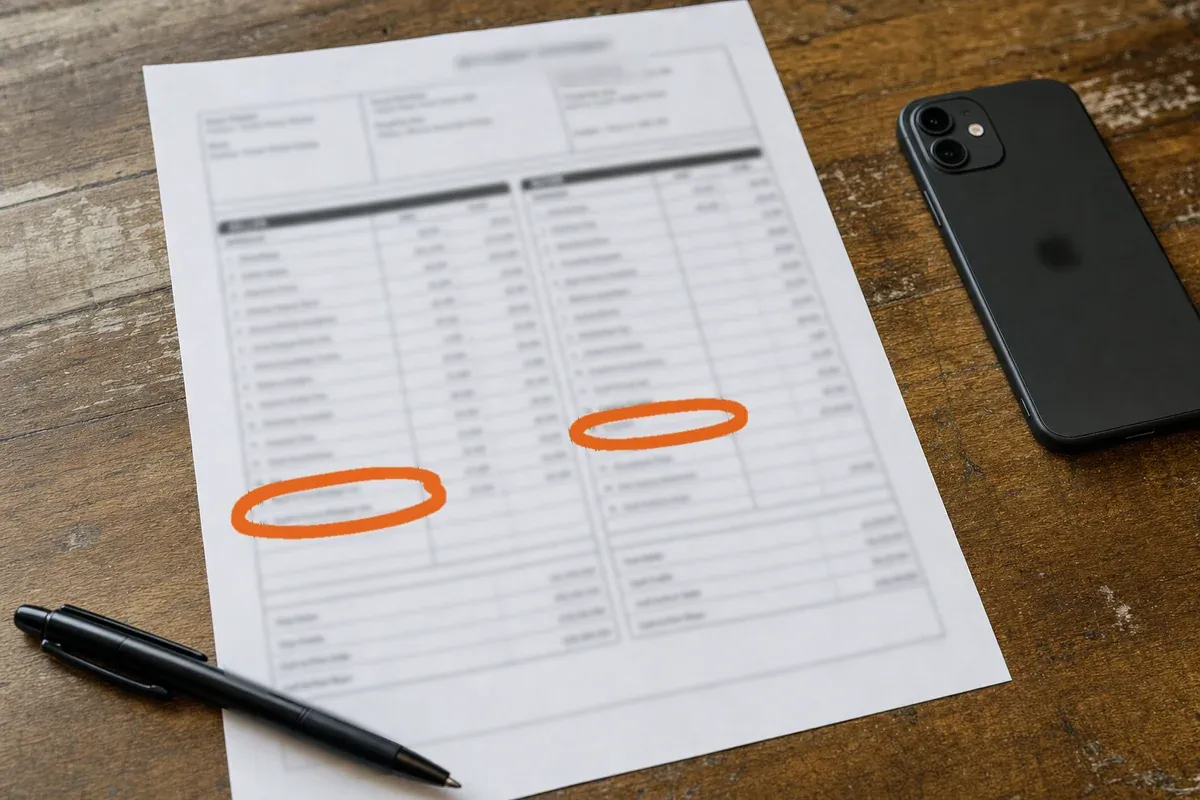
Ask your closer for the draft settlement statement a day or two before closing. Cash and investor deals often use the ALTA settlement statement forms. It shows every dollar: the price, the payoffs, the taxes, the fees and who gets what.

Your assignment fee usually shows as a line on the buyer's side, payable to you as the assignor. There's no single required line or label, so every title company does it a little differently. Make sure it's there and it's right.

In Pennsylvania, the assignment fee is part of the transfer tax base, so expect it in the tax lines too. Lesson 16 explains why.

Checklist
  • Price and payoffs match the commitment
  • Your fee shown and correct
  • Questions sent to your closer before closing day
Sample settlement statement on a desk with the assignment fee line and the payoff lines circled in orange

Step 5: Funding and payout: how everyone gets paid

On an assignment, your buyer wires their money to the title company. Once the money is in and everyone has signed, the title company pays off the liens, pays the seller what's left after their costs and pays your fee from the closing funds.

On a double close, the first closing is paid with your cash or a transactional lender's money. The second closing is paid with your buyer's money. Then the lender is repaid with its fee, and what's left is yours.

When the money actually goes out depends on the funding and your state's rules, so timing varies. Ask your closer when to expect your wire or check.

Checklist
  • Your buyer's wire confirmed received
  • Your payout method and timing confirmed

Step 6: After closing: record, file and follow up

The title company records the deed. Ask for a copy of the final settlement statement and keep it with your contract, your assignment and your disclosures. You'll want them at tax time.

Then do the two things most people skip. Thank your closer, because you'll need them again. And ask your buyer what they want next, because a buyer who just closed is your best lead for the next deal. Lesson 19 is about turning this into a routine.

Checklist
  • Final settlement statement saved
  • A thank-you to your closer
  • Your buyer asked what they want next

Or get your license. In these states, a real estate license may be the cleanest path. That's Oklahoma, Illinois, Virginia, Minnesota, South Carolina, Kentucky and Nebraska, where the closing method doesn't change the rule. Colibri Real Estate School ↗ has pre-licensing courses for each of them. Heads up: I earn a commission if you buy through my link. Costs you nothing extra, but it helps fund my Starbucks addiction. ☕

Assignment, double close or LLC sale

Closing day by method

Here's how closing day looks for each method. Lesson 16 covers how to choose between them.

AssignmentDouble close or transactional fundingLLC sale
DocumentsPurchase contract, assignment agreement, one settlement statementTwo contracts, two deeds, two settlement statements, lender papers if fundedA purchase agreement for the LLC interest, the LLC's records, and the LLC's closing with the seller
Who fundsYour end buyerYou or a transactional lender for the first closing, your buyer for the secondYour buyer pays you for the LLC. The LLC still has to close with the seller.
When you're paidFrom your buyer's funds at closingFrom the second closing, after the first one and the lender are paidUnder the LLC purchase agreement, often outside the title company. Unclear, attorney-drafted.
Watch forFHA buyers can't use it. Your state's disclosures.Utah requires separate funds. Two title orders. Your buyer's lender's rules.Transfer tax (New York and others), Delaware's disclosure and title limits
Late surprises

When a deal falls apart close to closing

Sometimes a deal dies in the last week. Your buyer's money doesn't show, title finds something new, or the seller backs out. Know your options before it happens.

  • The seller cancels. Some states give sellers that right on wholesale deals. In Missouri, if you skipped the required disclosure, the seller can cancel any time before closing and gets your earnest money. Pennsylvania's law lets the seller cancel too, and Oregon gives 3 business days. Check the laws by state for yours.
  • Your buyer backs out. Your assignment agreement should say what happens to their deposit. Line up your backup buyer from your list.
  • Title finds something new. Ask your closer what it takes to clear it and whether you can push the date. Get any extension in writing, signed by the seller.
  • Earnest money. The title company holds it until both sides sign a release or a court decides. Read your contract before you promise anyone a refund.
Does the method change the analysis?

Your closing method and your state's law

Short version: a double close, transactional funding or an LLC sale doesn't change the license rules in states like Oklahoma, Illinois, Virginia and Minnesota, and marketing rules in South Carolina, Kentucky and Nebraska apply whatever the closing. In other states it may matter, with limits.

Lesson 16 has the state-by-state table. In attorney-closing states like Delaware, an attorney runs or supervises closing day, and Lesson 17 has the details.

On paper

How the money moves on closing day

Simplified illustration with made-up numbers, not typical results. Closing costs, taxes and lender fees vary and are quoted by your title company, closing attorney or lender, so they're left out here.

Simplified illustration

An assignment closing

Your contract price with the seller is $120,000, and your buyer agreed to pay a $10,000 assignment fee.

ItemMade-up amount
Your buyer wires to title$130,000
Seller's mortgage payoff$61,000
To the seller, before their own costs$59,000
Your assignment fee, a line on the statement$10,000

One closing, one statement. Your fee comes from your buyer's funds at closing.

Simplified illustration

A double close with transactional funding

Same house. Your contract can't be assigned, so you buy it for $120,000 and resell it to your buyer for $130,000, the same day, at the same title company.

ItemMade-up amount
Closing 1: the lender wires your purchase price$120,000
Closing 1: payoff and the seller's money$120,000
Closing 2: your buyer wires the price$130,000
Closing 2: the lender is repaid$120,000 plus its fee
Left for you, before both sets of closing costs$10,000 minus the lender's fee

Two closings, two statements, two sets of costs. Get your lender's fee and both closing cost estimates in writing before you choose this.

Avoid these

Closing day mistakes to avoid

Wiring from an emailed instruction

Confirm every wire by phone, using a number you already know.

Skipping the draft statement

Read it a day or two early. Fixing a mistake at the table delays everyone.

Offering remote signing without asking

Not every title company, lender or county accepts it. Ask your closer first.

Missing a state disclosure

If your state requires one, it has to be signed before closing, not at it.

Going quiet on closing day

Keep your phone on. The seller will call you first if they're nervous.

Trying to hide your fee

Your fee belongs on the settlement statement, and many states require disclosure of your role.

Recap

Lesson recap

  • Before closing, confirm clear to close, your buyer's funds and every state disclosure.
  • Sellers can sign in person, with a mobile notary, by e-signing or remotely where it's allowed.
  • Confirm every wire by phone. Report fraud to your bank and ic3.gov right away.
  • Your assignment fee is paid from the closing funds. On a double close, you're paid from the second closing.
  • Save the final statement, thank your closer and ask your buyer for the next deal.

Before your first closing. Closing and wholesaling rules vary by state and change often. Check the laws by state where the property is, and have a local real estate attorney answer any legal questions.

See the whole Wholesaling University course free

Enter your name and email to read the rest of this lesson and every lesson in the course.

  • The full text of every lesson, opened on this device
  • Every step, worked example and checklist
  • My free Wholesale Deal Analyzer (Excel)

Free. No credit card. Unsubscribe anytime.

Unlocked. You're signed up, so every Wholesaling University lesson is open in full on this device.
Tools

Tools I use for this

Two free resources from me, and the lesson on getting your file to clear to close.

Free

Wholesaling laws by state

Disclosures and cancel rights where the property is, with links to the state's own sources.

Check your state
Free

Wholesale contracts

My purchase agreement and assignment contract. Have a local attorney add your state's disclosures.

Get the free contracts
Lesson 17

The title process

Open title, the title commitment and what clear to close means.

Read lesson 17
FAQ

Wholesale closing FAQ

Do I have to attend closing on a wholesale deal?

Often not on an assignment. You sign the assignment agreement ahead of time, and the seller and your end buyer sign their own papers. On a double close you're a buyer and a seller, so you'll sign both sides. Ask your title company or closing attorney what they need from you.

How long does it take to close a wholesale deal?

It varies. The title work, any probate or payoffs, how your buyer is paying and the title company's schedule all play a part. There's no standard timeline. Open title the day you sign and keep everyone moving, and you'll close as fast as the file allows.

How do wholesalers get paid at closing?

On an assignment, your fee is paid from the closing funds and shows on the settlement statement. On a double close, you're paid from the second closing, after the first closing and any transactional lender are paid. Ask your closer how and when your payout will be sent.

Will the seller see my assignment fee?

Possibly. It depends on the closing and on your state's laws, and many state laws require written disclosure of your role. Don't plan on hiding it. Be upfront with the seller about how you work before they sign, and let the settlement statement show what it shows.

Can the seller sign remotely?

Often, yes, through a mobile notary who comes to them or a remote online notary over video, if the state and the title company allow it. Most states allow remote online notarization, but some title companies, lenders and counties won't accept it for real estate. Ask your closer first.

How do I avoid wire fraud at closing?

Confirm wiring instructions by calling the title company at a number you already know, never one from an email. Tell your buyer and seller the same rule. If money goes to the wrong place, call your bank right away to ask for a wire recall and report it at ic3.gov.

What if the seller cancels right before closing?

Some states give sellers that right on wholesale deals. In Missouri, a seller who didn't get the required disclosure can cancel before closing and gets your earnest money. Pennsylvania lets the seller cancel, and Oregon gives 3 business days. Check the laws by state page and your contract, and talk to an attorney.

Is closing different for a double close?

Yes. A double close is two closings, usually back to back at the same title company, with two deeds and two settlement statements. The first closing is paid with your cash or a transactional lender's money, and the second with your buyer's money. Expect two sets of closing costs.

Next: lesson 19, Get paid and repeat: your wholesaling system

Turn one deal into a repeatable weekly process.

Heads up: I earn a commission if you buy through my link. Costs you nothing extra, but it helps fund my Starbucks addiction. ☕

Not legal advice. Confirm with a licensed attorney in your state.

Not financial or legal advice. Wholesaling University is for education. David Frizzell is a real estate investor, not an attorney or financial advisor. Wholesaling laws vary by state, so check the rules in your state before you market a property or make offers, and talk to a local real estate attorney if you're not sure.

Free download

Free wholesaling contract pack

Wholesaling contract templates, free. Enter your email and the pack lands in your inbox.

Free. Unsubscribe anytime. After you sign up you can read my DealMachine review.