Wholesaling University · Lesson 11 of 19

How to Estimate Rehab Costs

You don't need to be a contractor to ballpark repairs. You need a method, local prices and a cushion. Here's the one I'd use on my first deal.

Module 4: Running the numbersAbout 12 min readFree course
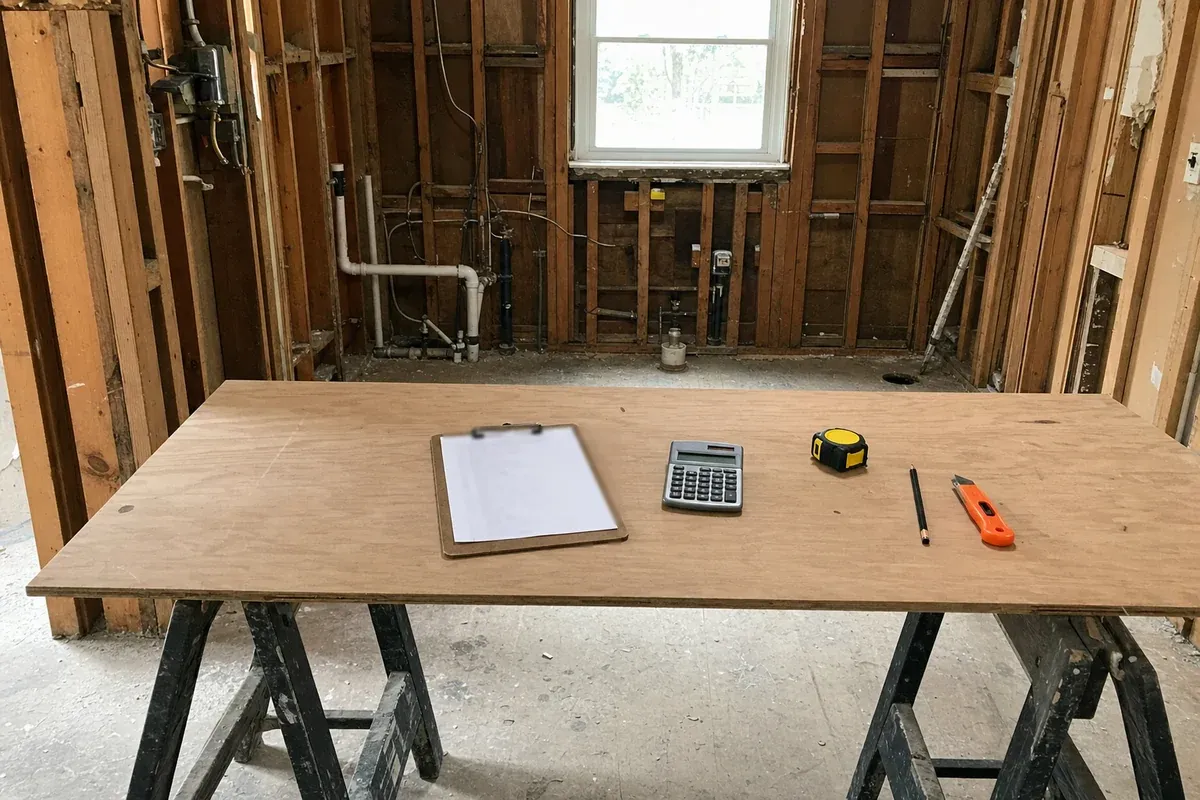
How to estimate rehab costs: a clipboard, a calculator, a tape measure, a pencil and a utility knife on a plywood table in a kitchen stripped to the studs
Quick answer

To estimate rehab costs, start with your walk-through list and photos. Decide whether the house needs a light, medium or full rehab. Price the big-ticket items first (roof, systems, foundation), then the rooms, using local prices from contractors and your cash buyers. Add permits and other soft costs, add a cushion, and check the total with a buyer.

Lesson
11 of 19, module 4: Running the numbers
Time
About 12 minutes to read
You'll need
Your walk-through notes and photos, and a few local contractors' phone numbers
Next
Lesson 12: maximum allowable offer
The short answer

Why your repair estimate matters

Your repair number goes straight into your offer. Your cash buyer takes the after repair value, subtracts their profit and the repairs, and that's what they'll pay. If you guess the repairs too low, your buyer will find out and either renegotiate or walk away, and you're stuck with a contract you can't sell.

The good news: you don't need to price every outlet. You need to get the big items right, be honest about the scope and add a cushion. Your buyer will do their own numbers anyway. Your job is to be close enough that the deal still works when they do.

I'm a real estate investor, not an attorney or financial advisor, and not a contractor. Prices vary a lot by market, so everything here is a method, not a price list.

Scope

Light, medium or full rehab, based on what you saw.

Big items first

Roof, systems, foundation and windows drive the total.

Local prices

From contractors and your cash buyers, not national averages.

Cushion

Add a buffer for what you can't see.

Start with the scope

Light, medium and full rehab: what each one usually means

Most investors talk about rehabs in rough levels. Deciding the level first keeps your estimate from drifting. These are general descriptions, not rules.

LevelWhat it usually includesWhen you'll see it
Light (cosmetic)Paint, flooring, fixtures, light landscaping, a deep cleanThe house is dated but solid, and the systems work
MediumEverything in light, plus a new kitchen or baths and one or two big-ticket itemsDated and tired, with a roof or furnace near the end of its life
Full (gut)Most of the interior redone, plus several big-ticket items and often systemsVacant for a long time, water damage, or nothing updated in decades

Your buyers will tell you which level they think a house is. Ask them, and adjust to how they see it.

Free: my Rehab Estimator Cheat Sheet. A quick reference to keep next to your walk-through list while you price these repairs, so you don't skip an item. Enter your email and I'll send it over. Get the cheat sheet

Step by step

How to estimate rehab costs, step by step

Step 1: Start from your walk-through list and photos

You can't estimate what you didn't see. Pull up your repair list and photos from the walk-through (Lesson 10 has the checklist). Go room by room and make sure every repair is on the list.

Then fill in the gaps. If you didn't get the age of the furnace, the size of the roof or the number of windows, call the seller or go back. A rough guess on a big item can be off by more than your whole assignment fee.

Checklist
  • Repair list complete, room by room
  • Photos of every problem area
  • Square footage, bedrooms, baths and number of windows
Step 2: Pick the rehab level

Use the levels table above and decide: light, medium or full. Be honest. New wholesalers tend to call a full rehab a medium one, because the lower number makes the deal look better.

Think about who buys this house after the rehab. In a neighborhood of updated homes, buyers will expect new kitchens and baths. In a rental area, the buyer may just want it clean, safe and working. Your comps from Lesson 9 show you what finished houses look like nearby.

Checklist
  • Rehab level picked: light, medium or full
  • Your comps checked for the finish level buyers expect

Step 3: Price the big-ticket items first

Go down the big-ticket table above. For each item the house needs, get a local price. That's the part that matters most, so spend your time here.

Where do local prices come from? Call two or three contractors for each trade and ask for a rough range for your size of house. Ask your cash buyers what they've paid recently for a roof or a furnace. They rehab every month and usually know. Over time, build your own price sheet.

National cost guides and online calculators are fine for a sanity check, but labor and material prices vary a lot by market. Use local numbers in your estimate.

Checklist
  • Each big-ticket item listed
  • A local price or range for each one
  • Your price sheet started
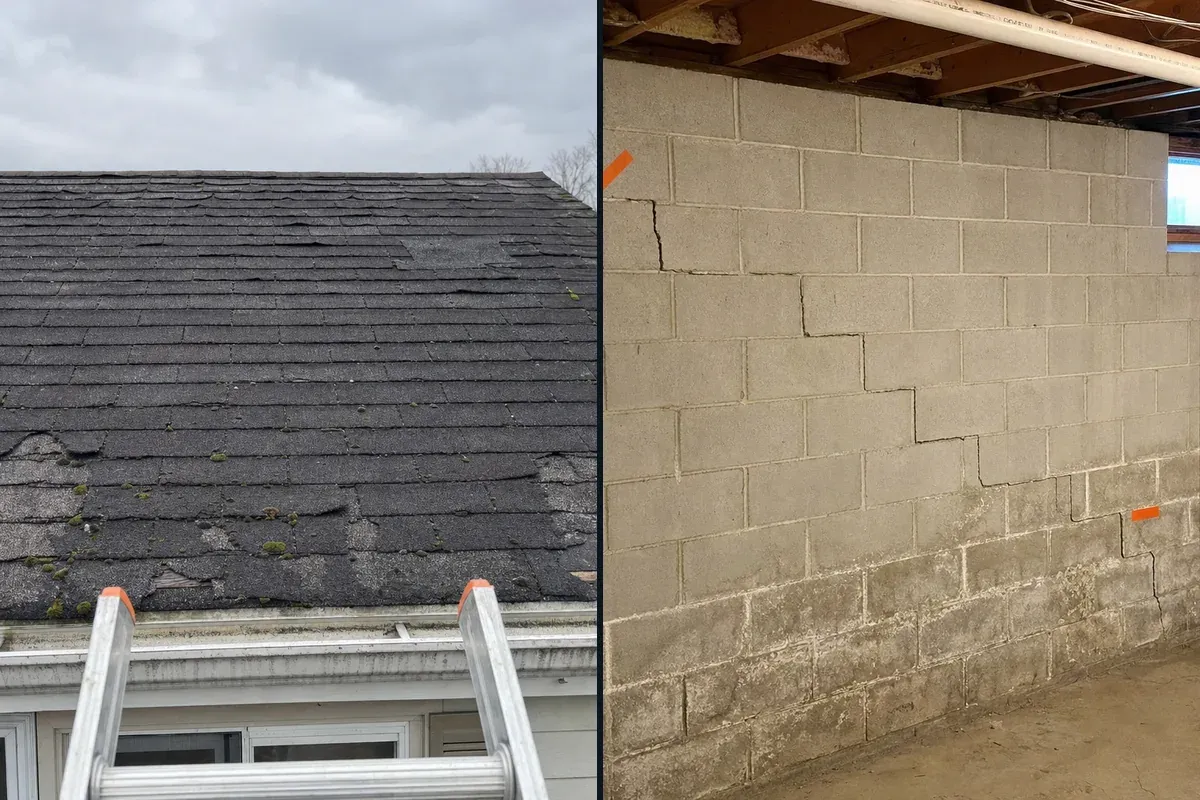
Big-ticket repairs to check first: a worn roof with curling shingles seen from the top of a ladder, and a basement block wall with a long stepped crack

Step 4: Add the rooms and the finishes

Now go room by room: kitchen, baths, flooring, paint, doors and trim, light fixtures, appliances, landscaping and a cleanout if the house is full of stuff.

Kitchens and baths are the biggest of these. Price them as a package based on the level you picked. Flooring and paint are usually priced by the square foot, so measure or use the square footage from the county record.

Checklist
  • Kitchen and baths priced as a package
  • Flooring and paint by square foot
  • Cleanout and landscaping

Step 5: Add permits and the costs people forget

Many cities require permits for roofing, electrical, plumbing, HVAC and structural work. Call your building department and ask what needs a permit and what it costs. Some areas also require licensed contractors for certain trades, and those rules vary by state and city.

Lead-safe work: in homes built before the federal ban on lead paint for homes, paid renovation work that disturbs painted surfaces falls under the EPA's lead renovation rule, which requires certified firms and lead-safe practices. That can add cost. Mold: the EPA says an area larger than about 10 square feet calls for its guidance on bigger cleanups, and that's often a job for a pro.

Also add dumpsters, utilities during the rehab, and anything specific to the house, like a sewer line or septic inspection.

Checklist
  • Permits checked with the building department
  • Lead-safe work if the house is old enough
  • Dumpster, utilities and inspections

Step 6: Add a cushion

Every rehab finds something nobody saw: rotted subfloor under the tub, wiring behind a wall, a cracked sewer line. Add a cushion on top of your total. Many investors add 10 percent or more, and more on older houses or full rehabs.

The cushion isn't padding to scare the seller. It's there so your buyer's number and yours end up close, and the deal survives their inspection.

Checklist
  • A cushion added to the total
  • A bigger cushion for older houses and full rehabs

Step 7: Check your number with a buyer

Before your number goes into your offer, run it by one or two cash buyers who rehab in that area. Send them the photos and your list and ask, "What would you budget for this?" Their answer is the one that counts, because they're the ones paying.

Then plug it into your maximum allowable offer in Lesson 12. After each deal, compare your estimate with what the buyer actually spent if they'll tell you, and update your price sheet.

Checklist
  • Estimate checked with a buyer
  • Repair number in your MAO
  • Price sheet updated after each deal
Where the money goes

The big-ticket repairs to price first

These items make or break a rehab budget. Get them right and small misses on paint and fixtures won't sink the deal.

ItemSigns on the walk-throughWho to ask for a price
RoofCurling or missing shingles, stains on the ceiling or roof deck, more than one layerRoofer
Heating and coolingOld age on the data label, rust, no heat or no coolingHVAC contractor
FoundationWide or stepped cracks, bowing walls, sloping floors, doors that stickFoundation contractor or structural engineer
ElectricalOld or unusual panel, too few outlets, signs of overheatingLicensed electrician
Plumbing and sewerLeaks, old pipe types, slow drains, sewage smellPlumber, and a sewer camera inspection
SepticThe house isn't on city sewer, soggy ground over the fieldSeptic contractor
Windows and sidingRot, broken glass, fogged panes, missing or damaged sidingWindow or siding contractor
Water damage and moldStains, soft drywall, musty smell, visible growthMold remediation company
DrivewayCrumbling, heaved or cracked concrete or asphaltConcrete or paving contractor
On paper

A rehab estimate on a made-up house

Simplified illustration with made-up prices, not real costs for your market. Get local prices before you use any number like these.

Simplified illustration

Made-up 3 bed, 1 bath ranch, medium rehab

The walk-through found an old roof, an old furnace, a dated kitchen and a soft bathroom floor.

ItemMade-up price
Roof tear-off and new shingles$9,000
Furnace$4,500
Kitchen package$12,000
Bath and subfloor$7,500
Flooring and paint, about 1,200 sq ft$8,000
Permits, dumpster and utilities$2,000
Subtotal$43,000
Cushion at 10%$4,300
Repair estimate$47,300

The big-ticket items and the kitchen are most of the total. If a buyer says the roof is closer to a different number in their market, use theirs.

Avoid these

Mistakes to avoid when estimating repairs

Calling a full rehab a medium one

Pick the level honestly. A low guess comes back as a renegotiation.

Guessing on the big-ticket items

Get local prices for the roof, systems and foundation first.

Using national averages as your number

Use them as a sanity check. Your estimate needs local prices.

Forgetting permits and soft costs

Permits, dumpsters, utilities and lead-safe work add up.

No cushion

Every rehab finds something. Add a buffer.

Never checking with buyers

Your buyers rehab every month. Ask what they'd budget.

Recap

Lesson recap

  • Start from a complete walk-through list and photos.
  • Pick the rehab level honestly: light, medium or full.
  • Price the big-ticket items first with local prices from contractors and buyers.
  • Add rooms, finishes, permits, lead-safe work and other soft costs.
  • Add a cushion, check the number with a buyer, then use it in your MAO.

Before you count on a number. Permit, contractor licensing and lead-safe work rules vary by state and city and change often. Check with your building department, read Lesson 2 for the wholesaling rules, and ask a local attorney anything specific to your deal.

See the whole Wholesaling University course free

Enter your name and email to read the rest of this lesson and every lesson in the course.

  • The full text of every lesson, opened on this device
  • Every step, worked example and checklist
  • My free Wholesale Deal Analyzer (Excel)

Free. No credit card. Unsubscribe anytime.

Unlocked. You're signed up, so every Wholesaling University lesson is open in full on this device.
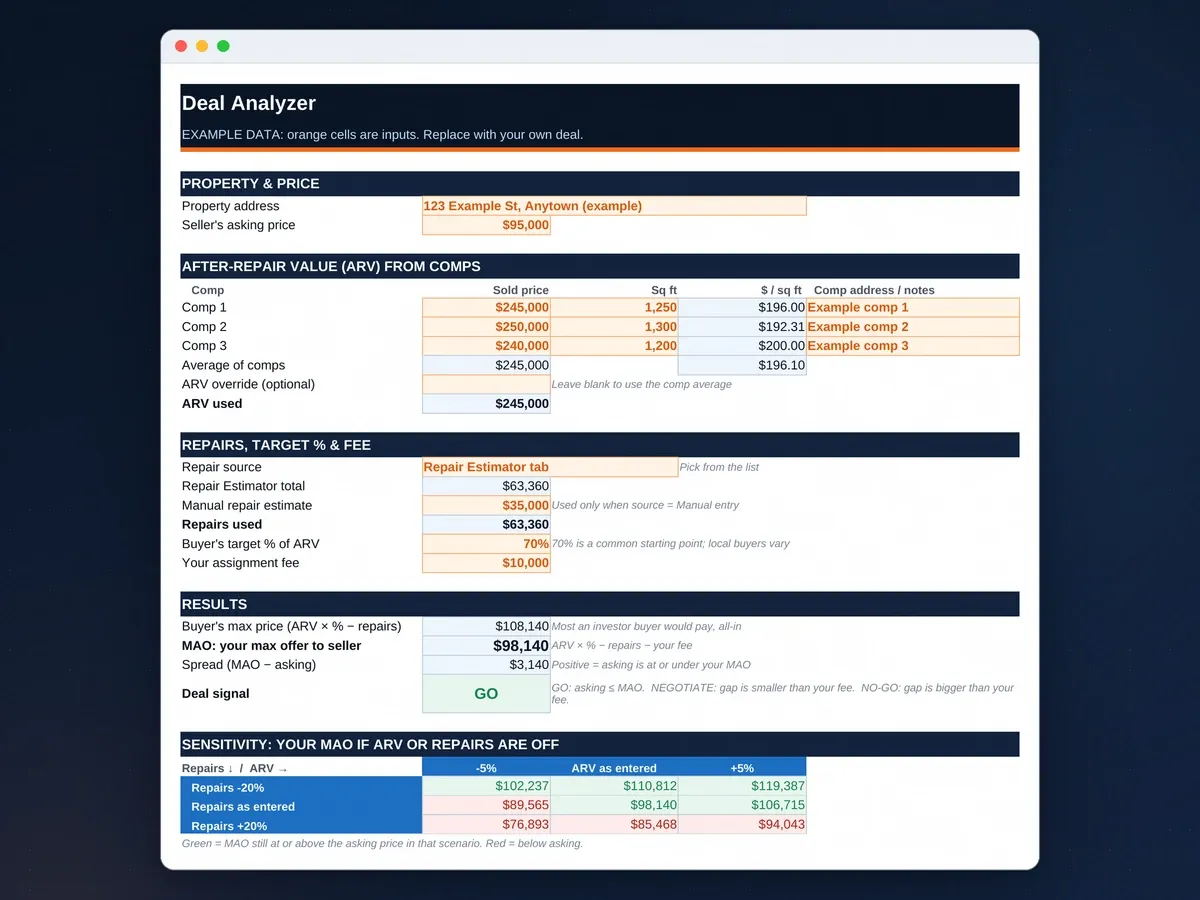
Excel Deal Analyzer tab showing the maximum allowable offer box
Free tool

Run these numbers in my free Wholesale Deal Analyzer

An Excel workbook that takes you from comps to ARV, repairs and your maximum allowable offer in one sheet. Free.

  • Averages up to 3 sold comps into an ARV, with price per square foot
  • Repair estimator with 19 line items
  • MAO = ARV x your buyer's % - repairs - your fee, with a go, negotiate or no-go signal
  • A buyer view and a rental view of the same deal
Get the free Deal Analyzer
Tools

Where to go next

Your repair estimate is one piece of the offer. These lessons cover the rest.

Lesson 10

Property walk-through checklist

What to check and photograph so your estimate starts from a full list.

Read lesson 10
Lesson 12

Maximum allowable offer

Where your repair number goes, and how to find your walk-away price.

Read lesson 12
Lesson 9

Calculating ARV

The after repair value your buyer's numbers start from.

Read lesson 9
FAQ

Estimating rehab costs FAQ

How do wholesalers estimate rehab costs?

Start from the walk-through list and photos, pick a rehab level, price the big-ticket items with local prices from contractors and cash buyers, add the rooms and finishes, permits and soft costs, then add a cushion. Before the number goes into your offer, check it with a buyer who rehabs in the area.

What are the big-ticket repairs to look for?

The roof, heating and cooling, foundation, electrical, plumbing and sewer, septic, windows and siding, water damage and mold, and the driveway. These drive most rehab budgets. Get them right, and small misses on paint and fixtures usually won't sink the deal.

Can I use a price per square foot for repairs?

As a rough first check, maybe, but it hides the items that matter. A house that needs a roof and a furnace can cost far more than one that only needs paint and carpet, even at the same size. Price the big items one by one.

How much cushion should I add to a rehab estimate?

Many investors add 10 percent or more on top of their total, and more on older houses or full rehabs. The cushion covers what you can't see on a walk-through, like rotted subfloor or old wiring behind walls.

Do I need to worry about lead paint as a wholesaler?

You won't do the work, but your buyer will, and it affects their cost. In homes built before the federal ban on lead paint for homes, paid renovation that disturbs paint falls under the EPA's lead renovation rule, which requires certified firms. Note the year built in your estimate.

Where do I get local repair prices?

Call two or three contractors per trade for a rough range, and ask your cash buyers what they've paid recently for roofs, furnaces, kitchens and flooring. Keep a price sheet and update it after every deal. National cost guides are fine for a sanity check.

Next: lesson 12, Maximum allowable offer (MAO): formula and examples

The 70% rule, your buyer's all-in number and how to find your walk-away price.

Heads up: I earn a commission if you buy through my link. Costs you nothing extra, but it helps fund my Starbucks addiction. ☕

Not legal advice. Confirm with a licensed attorney in your state.

Not financial or legal advice. Wholesaling University is for education. David Frizzell is a real estate investor, not an attorney or financial advisor. Wholesaling laws vary by state, so check the rules in your state before you market a property or make offers, and talk to a local real estate attorney if you're not sure.

Free download

Free wholesaling contract pack

Wholesaling contract templates, free. Enter your email and the pack lands in your inbox.

Free. Unsubscribe anytime. After you sign up you can read my DealMachine review.