Wholesaling University · Lesson 3 of 19

How to Choose Your Wholesaling Market

Pick a market where investors already buy, the prices fit their budgets and the state's rules work for you. Here's how I check one with free data, and how to test it before you spend real money.

Module 1: FoundationsAbout 13 min readFree course
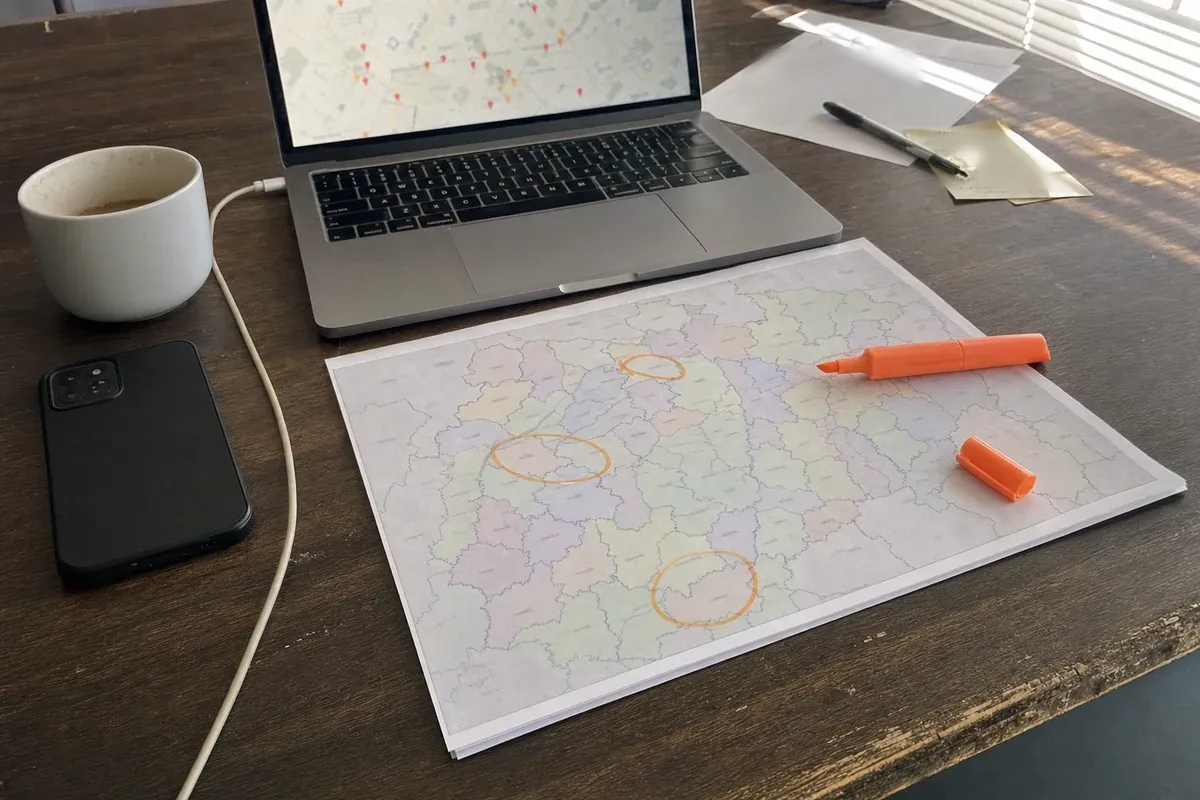
How to choose a wholesaling market: a printed county ZIP code map with areas circled in orange on a desk next to a laptop showing sold homes
Quick answer

To choose a wholesaling market, start where you live if it works, and go virtual if it doesn't. A good market has investors already buying with cash, house prices that fit their rehab budgets, homes that still sell at a steady pace, and wholesaling rules you can follow. Check it with free data, then test it with a small list before you spend more.

Lesson
3 of 19, module 1: Foundations
Time
About 13 minutes to read
You'll need
Your county's property records site and a spreadsheet
Next
Lesson 4: building your cash buyers list
The short answer

How do you choose a wholesaling market?

There's no single best market for wholesaling. There's the best market for you: one where you can find motivated sellers, sell the contract to a cash buyer, and do it all by your state's rules. When all three line up in the same few ZIP codes, you've found your market.

I wholesale in Tampa Bay, and I picked my area the simple way. I looked at where my investors were buying and worked those neighborhoods. I call it reverse wholesaling: buyers first, then you market for the houses you already know they'll buy. This lesson turns that into a checklist you can run on any area, near you or across the country.

Quick note before we start: I'm a real estate investor, not an attorney or financial advisor. This lesson is education, not legal or financial advice.

Investors already buying

Recent cash sales and repeat buyers in public records. No buyers, no deal, no matter how many sellers you find.

Prices that fit

Houses priced where your buyers' rehab budgets and the 70% rule still leave room for a deal.

Houses that still sell

Fixed-up homes that sell at a steady pace, so your buyers keep buying.

Rules you can follow

A state and city where you can wholesale the way you plan to, or you know what it takes.

Local or virtual?

Should you wholesale in your own market or virtually?

Start local if your area passes the checks below. Go virtual when it fails on buyers, prices or rules. The work is the same, and what changes is how you see houses and meet people.

Your own marketVirtual market
Seeing housesYou walk them yourselfA local helper sends photos and video
Finding sellersDriving for dollars, mail, callsLists, calls, texts and email
Cash buyersMeet them at local meetupsFound in public records, by phone
Learning curveFaster. You see the repairs.Slower. You rely on others.
State rulesYour stateThe state where the property is
Best whenYour area has buyers and fitting pricesYour area fails on buyers, prices or rules

Many wholesalers end up doing both: local for the learning, and a virtual market once they have a system. Either way, work one market at a time.

Step by step

How to choose your wholesaling market, step by step

Step 1: Start where you live, unless your area fails the test

Start with the area you already know, close to home. You'll drive for dollars, walk houses, meet contractors and get to closings, and you don't want an hour in the car every time. Life also gets in the way. The school calls, a friend needs a ride. When your area is close, you get back to work fast.

You also know what local houses are worth and which streets investors like. That's a head start nobody can sell you.

If you live in the middle of nowhere, or your area has almost no investors buying, you have two choices. Move (probably not), or wholesale virtually in a market that passes the checks in this lesson. Virtual also works if you have to work from home. My virtual wholesaling guide shows how it works.

Checklist
  • A home area you can reach in about 30 minutes
  • A backup market in mind, in case yours fails
  • One market only, not three

Step 2: Check the state's wholesaling rules first

This check can end the conversation, so do it before anything else. The rules that count are where the property is, not where you live. Some states require a license or registration for certain wholesaling, and many require written disclosures or give the seller time to cancel.

A state with more rules isn't off the table. It changes your contract, your timeline and maybe your costs. Look up the state on my wholesaling laws by state page, then read Lesson 2 for the checklist I'd run before a first contract. Not legal advice. Confirm with a licensed attorney in your state.

Checklist
  • License, registration or disclosure rules where the property is
  • Any city or county rules too
  • A local real estate attorney's name for your contract review

Step 3: Find where investors already buy

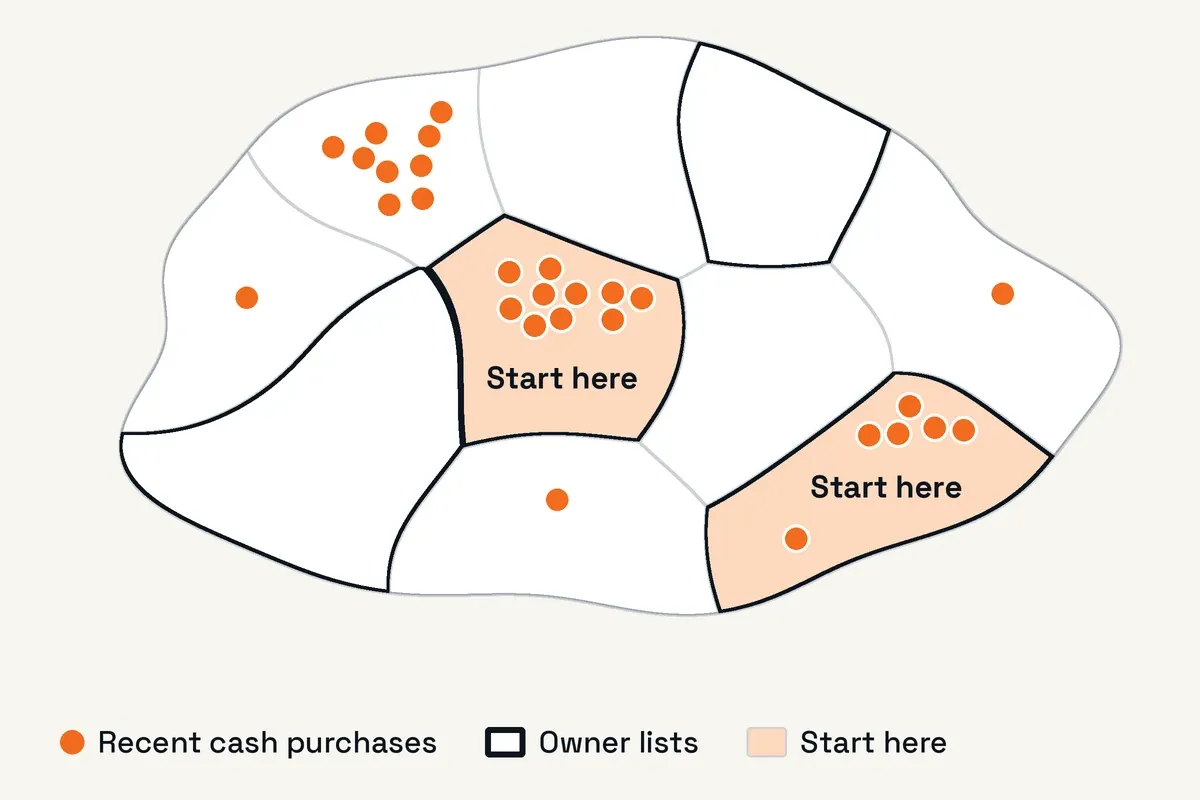
This is the most important signal, and it's where the fish are biting. Look for houses that sold in the last 6 to 12 months with no mortgage recorded. Those are usually cash sales. Then look for buyers who show up more than once, often an LLC. Repeat buyers are flippers and landlords who need more houses.

You can dig through your county property appraiser and recorder sites for free. It's slow, but it works. In DealMachine I filter by Last Sale Date, Free and Clear and Corporate Owned or Absentee Owned, and see on a map where the buys cluster. Read my DealMachine review to see if it fits you.

In Texas and a few other states, sale prices aren't public record. You can still see the deed, the buyer and whether a mortgage was recorded, so cash buyers still show up. If almost all the investors buy south of town, why market anywhere else?

Buyer activity checklist
  • Cash sales in the last 6 to 12 months
  • Buyers with two or more purchases
  • The ZIP codes where they buy most
Map of a county by ZIP code with recent cash purchases and owner lists overlapping in the areas marked Start here

Step 4: Match the prices to your buyers' budgets

Wholesale deals only work when there's room between what a seller will take and what your buyer can pay after repairs. Look at the price range investors actually pay in your cash-sale list, and how much work those houses need. Lesson 12 shows the MAO math, and Lesson 11 covers rehab costs.

Pick a price range you're comfortable in. My market has always been lower to middle priced neighborhoods, because that's what my investors buy. I know what those houses are worth and what the repairs cost. If I jumped to million-dollar homes tomorrow, I'd have to relearn rehab costs and build a new buyers list. Learn the business where you're comfortable, then move up if you want to.

Checklist
  • The price range your cash buyers pay
  • The kind of rehab those houses need
  • A range you can estimate repairs in

Step 5: Check how fast houses sell

Your buyers fix and resell, or fix and rent. They keep buying when fixed-up homes sell. So check the retail market's speed: days on market, the sale-to-list ratio (what homes sell for compared to the asking price) and inventory, which is how many homes are for sale.

The Redfin Data Center ↗ and Zillow's research data ↗ are free. They track these by metro, and Zillow's home values go down to the ZIP code. Redfin also tracks investor purchases and cash purchase share for big metros. When days on market climb and price cuts pile up, buyers get careful and want deeper discounts. That doesn't kill a market, but it changes your offers.

Checklist
  • Days on market, and which way it's moving
  • Sale-to-list ratio
  • Inventory rising, falling or flat

Step 6: Look at people, jobs and renters

Landlords are steady buyers, and landlords buy where tenants are. Check whether the area's population is growing, flat or shrinking, whether jobs come from several industries or one big employer, and what rents look like.

The Census Bureau's QuickFacts page has population, the share of owners versus renters and median home values by county and city, for free. Its American Community Survey adds the age of the homes. The Bureau of Labor Statistics publishes local job and unemployment numbers. Zillow's rent index shows rent trends. Older neighborhoods also matter, because older houses need more work, and that's where motivated sellers come from.

Checklist
  • Population trend for the county
  • Where the jobs come from
  • Rents and the share of renters

Step 7: Narrow it to an area you can market again and again

You probably don't have a big marketing budget, so don't spread it thin. If I mailed every vacant house in the whole Tampa Bay area, it would cost a small fortune. If I picked just Bradenton, I could afford to mail the same list several times, and repeat touches usually get more replies than one big send.

So pick a few ZIP codes where your buyers already buy and own them. Then count the owners you could market to there: absentee owners, vacant houses, inherited homes, tax delinquent owners. Your county's tax collector and clerk often post those lists, and DealMachine pulls owner lists by ZIP code. Lesson 7 compares the ways to reach them.

Checklist
  • A short list of ZIP codes where buyers and sellers overlap
  • A count of owners you could market to
  • Enough budget to reach them more than once

Step 8: Test the market with a small list

A market that looks good on paper is still a guess. Test it before you commit. Before you market, call a handful of the repeat buyers you found. Ask what they buy, where and in what condition. If nobody calls back, that tells you something.

Then pick one owner list and one channel, like mail, cold calls or cold email, and work it the same way for a set time, at least a couple of months. Track five numbers: leads, conversations, appointments, offers and contracts. Lots of talk and no contracts usually means your price or your follow-up needs work. No conversations at all means change the list, the channel or the market.

Before you call or text anyone, read the do-not-call and texting rules, and any local solicitation rules. They apply to you too.

Market test checklist
  • Five or more buyer calls with notes on what they buy
  • One list, one channel, a fixed test window
  • Leads, conversations, appointments, offers and contracts tracked
  • A title company that closes assignments

Be someone sellers can relate to. I grew up in the Detroit area, so I'm comfortable in working neighborhoods. If you grew up somewhere else, that's fine, but think about how you'll come across. A seller can tell when you don't know their street. Work where you understand the houses and the people, and you'll build rapport faster.

Check it free

Where to check each market signal for free

You can run every step in this lesson without paying for data. Paid tools are faster, but most of them pull from the same public records.

SignalWhat to look forFree place to check
Cash buyersRepeat buyers with no mortgage recordedCounty property appraiser and recorder sites
Price rangeWhat investors pay, and the repairsYour cash-sale list, plus sold homes on Zillow or Redfin
Market speedDays on market, sale-to-list, inventoryRedfin Data Center, Zillow research data
People and jobsPopulation trend, job mix, rentersCensus QuickFacts, Bureau of Labor Statistics
Motivated sellersAbsentee, vacant, tax delinquent, probateCounty tax collector and clerk of court
State rulesLicense, registration, disclosuresWholesaling laws by state, then the state's own site

Write each market's answers in one row of a spreadsheet, one column per signal. It keeps you honest when the market you like scores worse than you hoped.

On paper

Comparing two areas

Simplified illustration with made-up numbers, not typical results. Two areas in the same county, checked with the steps above.

Simplified illustration

Area A vs. Area B

You pulled cash sales for the last 12 months and checked the free market data for two ZIP code areas near you.

SignalArea AArea B
Cash sales, last 12 months6411
Buyers with 2 or more buys142
Price investors paid$90,000 to $160,000$350,000 and up
Median days on marketAbout 30About 75
Older homesMostly built decades agoMostly newer
State rulesDisclosure requiredDisclosure required

Area A wins. It has repeat cash buyers, prices that fit rehab budgets and houses that sell at a steady pace. Area B looks nice, but two repeat buyers isn't enough to sell a contract to.

Simplified illustration

Testing Area A

You mail one list of absentee owners in Area A, the same way, for a set test window.

What you trackCount
Owners on the list500
Leads (calls back)9
Real conversations6
Appointments2
Offers made2
Contracts0

You're talking to sellers, so the market works. With offers but no contracts, look at your pricing and follow-up before you blame the market, then keep going.

Avoid these

Mistakes to avoid when choosing a market

Picking a market from a list online

A top cities list doesn't know your budget, your state's rules or where buyers want houses this month. Run the checks yourself.

Starting with sellers, not buyers

A great lead with no buyer is just a phone call. Find where investors buy first.

Marketing too big an area

One mailing to a whole metro costs a lot and gets forgotten. Repeat touches in a few ZIP codes work better.

Working three markets at once

Your buyers list, title company and know-how are all local. Split them three ways and none of them gets built.

Skipping the state law check

The rules where the property is decide how you can work. Check them before your first mailer.

Quitting the market too early

Give a market a fair test with one list and one channel before you decide it doesn't work.

Recap

Lesson recap

  • There's no single best market. Look for the overlap of cash buyers, motivated sellers and rules you can follow.
  • Start where you live if it passes. Go virtual when your area fails on buyers, prices or rules.
  • Check the state's wholesaling rules first, where the property is.
  • Find recent cash sales and repeat buyers, match the price range, and check days on market, people and jobs with free data.
  • Narrow to a few ZIP codes you can market again and again, then test it with a small list and track five numbers.

Before your first contract. Wholesaling laws vary by state and change often. Check the laws by state where the property is, and have a local real estate attorney review your contracts and disclosures.

See the whole Wholesaling University course free

Enter your name and email to read the rest of this lesson and every lesson in the course.

  • The full text of every lesson, opened on this device
  • Every step, worked example and checklist
  • My free Wholesale Deal Analyzer (Excel)

Free. No credit card. Unsubscribe anytime.

Unlocked. You're signed up, so every Wholesaling University lesson is open in full on this device.
Tools

Tools I use for this

Two free resources from me, and my reviews of two tools I use. Start with the free ones.

Free

Virtual wholesaling guide

If your area fails the checks, this is how to work a market you don't live in.

Read the guide
Free

Wholesale Deal Analyzer

My Excel and Google Sheets workbook: comps to ARV, repairs and your maximum allowable offer.

Get the Deal Analyzer
My review

DealMachine

What I use to find cash buyers and owner lists by ZIP code. Check the calling and texting rules before you reach out.

Read my DealMachine review
My review

InvestorBase

For the cash buyer side: finding active buyers in a market and getting a contract in front of them.

Read my InvestorBase review
FAQ

Choosing a wholesaling market FAQ

What is the best market for wholesaling real estate?

The one where you can find motivated sellers, sell contracts to repeat cash buyers and follow the state's rules. Lists of top cities go stale fast and don't know your budget. Check recent cash sales, price ranges, days on market and the state law, then test the market with a small list.

Should I wholesale in my own market or virtually?

Start in your own market if it has investors buying and prices that fit their rehab budgets. You'll learn faster when you can walk houses. Go virtual when your area fails on buyers, prices or rules, and follow the rules where the property is.

How do I know if a market is good for wholesaling?

Look for repeat cash buyers in the last 6 to 12 months of sales, prices that leave room for repairs and a fee, homes that sell at a steady pace, and older houses that need work. Then check the state's rules and run a small test campaign.

Can you wholesale real estate in an expensive market?

Yes, but it's harder. Fewer sellers will take a deep discount, your buyers need more cash, and your earnest money goes up. Look for distressed situations like inherited or vacant houses. If the numbers rarely work, a lower-priced market nearby or a virtual market may be easier to learn in.

How many markets should a beginner work?

One. Your buyers list, title company, contractors and market knowledge are all local. Split a small budget across three markets and none of them gets enough marketing to produce a contract. Get deals in one market first.

What are the best states for wholesaling?

States where you can wholesale the way you plan to, with buyers and fitting prices in the markets you pick. Some states require a license, registration or disclosures, so check the state where the property is on my wholesaling laws page and confirm with a local attorney.

How do I find cash buyers in a new market?

Pull houses sold in the last 6 to 12 months with no mortgage recorded, from county records or a tool like DealMachine. Focus on buyers with two or more purchases. Call them, ask what they buy and where, and ask for proof of funds. Lesson 4 walks through it.

Can I wholesale in a state I don't live in?

Yes. Many wholesalers work virtually. You follow the rules where the property is, not where you live, so check that state's license, registration and disclosure rules before you market. You'll need a local helper for photos and a title company that closes assignments.

Next: lesson 4, How to find cash buyers and build your buyers list

Pull real cash buyers from public records, meet them in person and qualify every one.

Heads up: I earn a commission if you buy through my link. Costs you nothing extra, but it helps fund my Starbucks addiction. ☕

Not legal advice. Confirm with a licensed attorney in your state.

Not financial or legal advice. Wholesaling University is for education. David Frizzell is a real estate investor, not an attorney or financial advisor. Wholesaling laws vary by state, so check the rules in your state before you market a property or make offers, and talk to a local real estate attorney if you're not sure.

Free download

Free wholesaling contract pack

Wholesaling contract templates, free. Enter your email and the pack lands in your inbox.

Free. Unsubscribe anytime. After you sign up you can read my DealMachine review.